

 by
by 

Online direct-to-consumer (DTC) meat sales offer family farms exciting chances to share high-quality products with more people — without the middleman taking a cut.
But without sufficient on-site cold storage, many farmers resort to letting third-party meat processors store meat and handle pickups. Unfortunately, outsourcing cold storage robs you of the chance to connect with customers and gives you far less control of your inventory.
On-site cold storage (and the inventory system to back it up) is a must for selling meat online — and most consumer-grade freezers aren’t big enough or powerful enough to do the job.
But the cost of a brand new walk-in unit can be tough to justify for young businesses — and you don’t want to get stuck with a lemon that drains your bank account via frequent repairs and high utility bills.
In this post, we’ll explore several commercial freezer options, including new and used units, and how to assess both.
Why You Should Invest in On-Site Storage
Maybe you already have a healthy freezer beef business, or you’re a hit at local farmers markets and want to expand to online sales. If you’re currently getting by without a walk-in freezer unit, why should you consider making the investment?
The biggest reason is that having on-site storage gives you more control of how you serve your customers. When you rely on your meat processors’ cold storage, you’re also handing them control of customer service and how and when orders are fulfilled. Plus, it makes it nearly impossible to fill smaller, à la carte orders.
In other words, a commercial freezer isn’t just another piece of equipment. It’s a growth opportunity.
The ability to take control of your inventory on-site has some distinct advantages for small farms, including:
- The ability to store meat year-round gives you more control of seasonal cost changes. You can avoid finishing beef in the winter, where feed can be significantly more expensive.
- Having access to individual cuts allows you to offer a shopping experience similar to a local butcher or supermarket, which makes your business much more competitive.
- On-site storage makes your picking and order fulfillment processes more efficient, allowing you to take more orders and grow.
- On-site storage gives you important opportunities to interact with customers during in-person pickups.
There’s still an elephant in the room. Commercial freezers aren’t cheap, even used ones.
When GrazeCart founders (and owners of Seven Sons) discussed this topic a few years back, they found that DTC meat businesses that hold off on buying cold storage can actually end up losing money in the long run.
If you run a small business, know exactly how much you’re growing on your land, and your existing freezer beef customers are taking care of your costs, you’re likely in good shape. But if you’re looking to grow your farm business, expand your customer base, or modernize the shopping experience, on-site cold storage is a must have.
Commercial Freezer Options: Used vs. New
Before getting a commercial unit, most farms' first on-site storage takes the form of commercial appliances (like chest freezers). But before long, you’ll need 10 to 20 freezers to store everything — and frankly, those appliances aren’t built to handle that volume of use.
Also, chest freezers and other consumer-grade freezers aren’t as easy to access and clean as commercial units. If you’re serious about selling meat online, it’s time for an upgrade.
Let’s be honest: A brand new commercial freezer is expensive. Smaller units can cost around $10,000 on the low end and up to $40,000 for something larger. If you have investors or the capital to buy a new unit, we encourage you to do so!
That said, most independent farmers just getting started with DTC sales don’t have tens of thousands of dollars lying around — especially as feed costs and other expenses continue to rise.
Luckily, if you have the patience, there are several affordable options to get large, used commercial freezer units at a fraction of the cost. Then, once your business picks up, you can save up for a new, more purpose-built cold storage solution.
4 Commercial Freezer Options for Farm Stores and Online Sales
Whether you’re buying a brand-new unit or fixing up an old one, the best way to price out a freezer is cost per cubic foot. This helps you put your costs into perspective.
For used units, your best starting point is to search eBay and Craigslist. There are many businesses that earn money by selling used or refurbished freezer units.
Here are several commercial freezer options to consider, including three creative used options and recommendations for new units.
1. Reefer Boxes

(Image source: CoolerTrailers.com)
Whether it’s an ice cream truck or an old perishable delivery truck, there’s a constant supply of old reefer box units (if you know where to look). Tons of reefer trucks are decommissioned at the end of their life every year.
With a few relatively cheap parts, minor fixes, and maybe an electrician to wire it up, you can convert an old reefer box into a functional walk-in freezer unit for your farm for about $3–$5/cubic foot (new units often cost closer to $30/cubic foot).
Any type of freezer box that comes off a truck or trailer is suitable, but only consider units with a walk door on it (as opposed to a roll-up door or large swinging door), or you’ll lose cooling efficiency every time you open it.
In terms of fixes, take a close look at the seals, repairing any leaks as needed. We recommend placing heat tape around door seals to prevent them from sealing shut. You’ll also likely have to purchase a new refrigeration unit, which can run a few thousand dollars.
However, the size you get for about $2,000—$3,000 total worth of parts and fixes is outstanding. While it can be a little bit of a pain (and doesn’t offer much space for pallets and dollies), a reefer box is an excellent option if you’re in the early stages of your business.

2. Freezer Containers
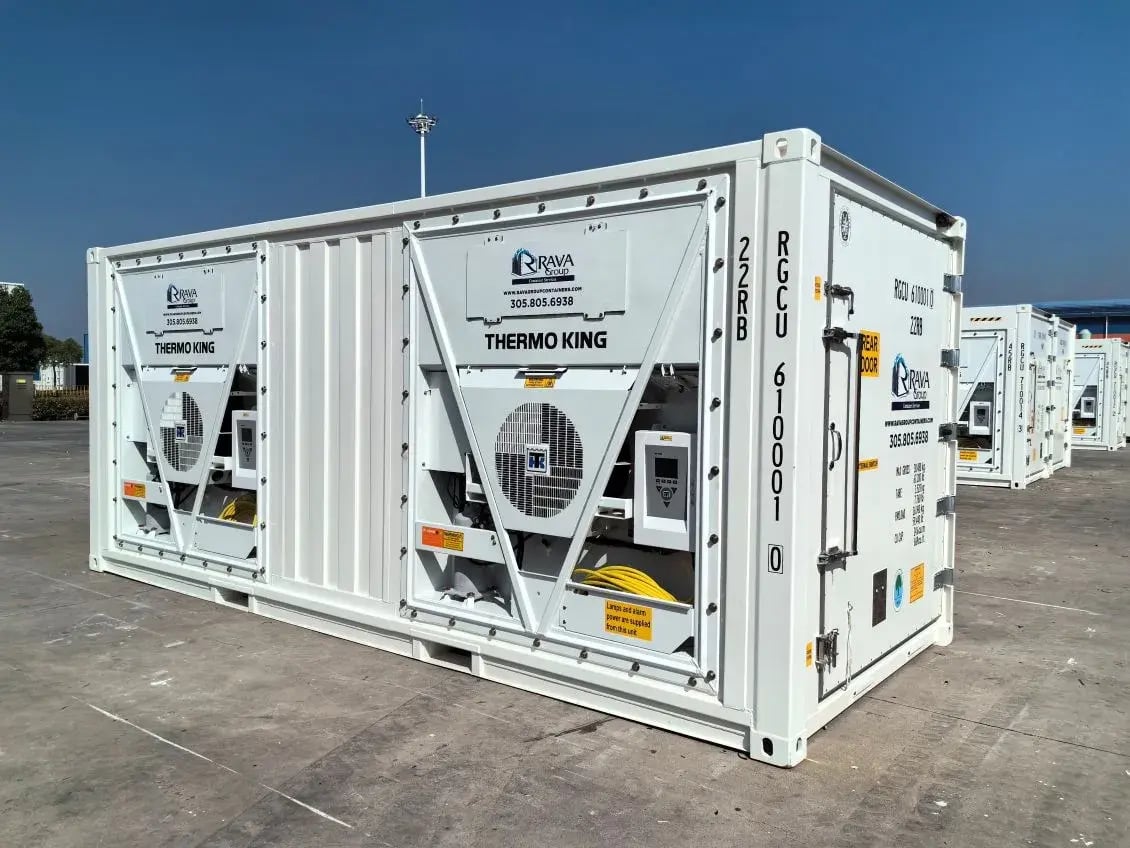
(Image source: RAVA Group)
Freezer containers (a.k.a. seed containers or reefer containers) are a standard 20 to 40-foot shipping container specifically outfitted for refrigeration or as a freezer. They’re built to withstand the elements, allowing farmers to use them outside without taking up valuable warehouse space.
Assuming the refrigeration unit still works and there are no major repairs to make, you can purchase used units at a value of about $11–$15/cubic foot.
Like the reefer boxes, they’re not perfect ergonomically. Often, the wide doors let a lot of cool air out when open, and it can be hard to get pallets in and out.
However, when you are ready to upgrade your cold storage, freezer containers are portable and tend to retain their resale value, unlike a traditional walk-in unit.
Related Read: 9 Best Cold Shipping Solutions for Your Farm-to-Table Business
3. Panel Box / Insulated Panels

(Image source: Sunnyda)
A panel box is the type of walk-in refrigeration or freezer unit you see at most restaurants. You can buy the various pieces separately and assemble them into different shapes, so you have more flexibility in how you lay out inventory.
Used insulated panels are relatively affordable, but like all used options, they have advantages and disadvantages. Compared to the reefer box and shipping container options, which are pretty much plug-and-play, building a storage space from panels takes more assembly time.
The trade-off is that they’re less expensive than pre-built options. When Seven Sons installed a panel box at their farm, they kept costs around $2–$3/cubic foot (even after buying and setting up a new refrigeration unit).
While panel boxes can be set up outside, we don’t recommend it. Exposure to the elements can wear down parts and make them inefficient.
If you’re looking for a used panel box, you must find one with an insulated floor. You also need to carefully consider where you build your panel box, as they’re not very mobile. If it’s located too far from your packing area, you’ll waste time trekking back and forth.
If you go down this route, it may be worth it to build a pad next to the side of the building or cut a hole in a wall to connect the panel box directly to your packing area.
Related Read: 5 Dry Ice Alternatives To Try for Shipping Meat
4. New Commercial Freezer Options for Farms
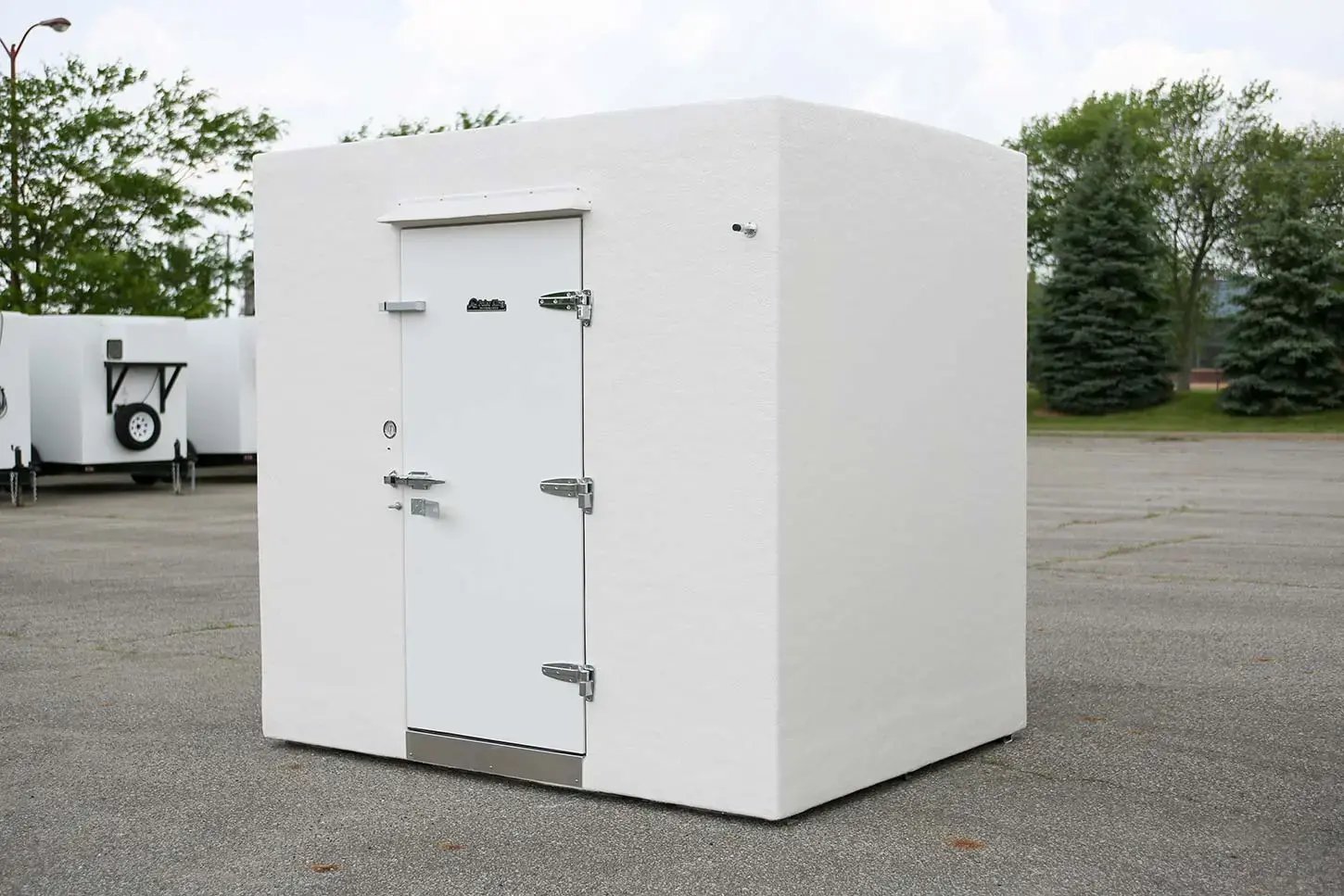
(Image source: Polar King)
To be clear, the used options listed above are an affordable stopgap, but they aren’t meant to be permanent solutions. You might not need the ability to move whole pallets of product in and out of your freezer right now, but that can change quickly.
Eventually, you want to invest in something new. It took Seven Sons almost 15 years before they bought brand-new freezer units.
When the time to upgrade comes, here are a few options:
- Polar King is a U.S.-based company that offers customizable commercial freezer units that will last for years to come.
- New insulated panels from companies like Falk let you build exactly the kind of space you want, if you’re willing to assemble it yourself.
- Amerikooler offers custom walk-in options and quick turnaround times. They also have prebuilt options that can be shipped directly to your location.
So, how long should you wait until you buy a new unit? It depends on your logistical challenges, sales volume, and cash flow. Here are two factors we typically look at:
- Can you afford to pay for a new unit in cash? In other words, is your cash flow healthy enough to justify that expense?
- Are your utilities as high as a few thousand dollars a month? If they are, the added efficiency of a new unit alone might pay for itself over the course of 10 years or so.
As your business grows, keep a close eye on your reports to get a clear picture of your overhead and labor costs to understand how an expensive commercial freezer might help.
A Commercial Freezer Is One Half — Your Inventory System Is the Other
Even the best on-site freezer in the world won’t save you any time and effort if it’s not backed up by a detailed inventory management system.
An inventory management system simplifies how you track and update your stock. This allows you to catalog all of your standard cuts, set the price by weight, and update stock levels in real time as orders are placed.
Along with on-site storage, an inventory management system is the foundation of successful DTC sales. But not all systems are built the same.
GrazeCart was built by farmers for farmers, with powerful but easy-to-use systems for creating custom inventory lists, selling by weight, simplifying fulfillment and pick lists, and other features that farm businesses big and small need to find long-term success.
If you’re ready to grow your business, schedule a customized demo today. Or, to learn more about the basics of shipping catch weight items, sign up for our free perishable shipping course.