
 by
by 

It’s Saturday night. You haven’t sent your weekly email yet. You open your laptop, stare at a blank screen, and after a few minutes of nothing, you type:
“Hi, here’s our weekly farm update…”
You hit send. And just like that, another email lands in your customers’ inbox only to be ignored.
Sound familiar?
If you're selling direct to consumer (DTC), whether that’s grass-fed beef, pastured pork, raw dairy, or seasonal produce boxes, email is almost certainly your highest-converting sales channel.
For every dollar you put into email, you get more back than any other channel ($36–$42 per dollar spent on average) — including Instagram and paid ads.
The farms that figure this out don't just build a list. They turn it into a revenue channel that brings in orders every single week.
Brooks and Blaine Hitzfelt (GrazeCart founders and co-owners of Seven Sons Farms, an eight-figure DTC operation) put it simply: “Email is our number one way that we create sales,” pointing to the reliable Sunday morning spike in Google Analytics traffic driven by a single send.
The difference between a list that generates predictable income and one that quietly collects dust isn't just your platform, your offer, or how often you send. It's the copy — how it reads, who it's written to, and whether you've built a system that lets you show up consistently.
Here are seven tips to get there.
1. Write From a Person, Not the Brand
This is one of the easiest wins most farms overlook, and it takes about 10 seconds to fix.
Open your email platform and look for the ‘From Name’ field. If it currently says something like Sunrise Hollow Farm, switch it to a real person:
Before: Sunrise Hollow Farm
After: Jamie | Sunrise Hollow Farm
Why does this work? Because people don’t open emails from logos — they open emails from people. “People are far more likely to trust and stay loyal to a person than a brand,” says Chad Graue, email marketing expert at Seven Sons Farms.
And this isn’t just a theory. It shows up in real life. Brooks from Seven Sons Farms shared that customers would walk into their store having never met the team in person, but had been on the email list for months.
“They would commonly say, ‘I've never met you, but I feel like I know you.' That’s when you know your emails are doing their job. They’re helping to build a relationship before the sale ever happens.”
One note: Transactional emails — order confirmations, shipping notifications, receipts — can still come from your brand name. Customers expect that. It's your weekly relationship-building emails where the human touch matters most.
2. Write to One Person, Not Your Whole List
Picture a real customer you know. Imagine them sitting on their couch, phone in hand, actually reading your email. Write to that one person.
When you do, everything changes. It stops feeling like an announcement and starts feeling like a conversation. And conversations are what drive sales.
Here are a few easy ways to do this:
- Start with a moment, not a pitch. Instead of "Now available" or "Stock your freezer," open with something real: "It's 6 a.m. and I'm out in the barn watching the first frost settle over the field…" That kind of opening pulls people in. It makes them pause instead of scroll.
- Let people into your world. The day-to-day reality of your farm, like the animals, the weather, the unexpected challenges — that’s the stuff your customers actually find interesting. They signed up because they care. Show them what they’re a part of.
- Tell stories, don’t just share facts. Product details matter, but they aren't enough on their own. People feel something first, then justify the purchase after. Your job is to give them something to connect with.
When you do this consistently, your emails stop sounding like marketing and start feeling like something people look forward to reading.
3. Make It Easy To Read
Even the best-written email won't do anything if no one actually reads it.
Most people open emails on their phone, skimming fast, deciding in seconds if it's worth their time. If it looks like a big block of text, they're out.
The fix is simple:
- Keep paragraphs short. Type one or two sentences, then hit enter. It may feel a little odd at first, but it makes your email much easier to scan.
- Stick to one main idea. You might have a lot going on this week, but don’t try to squeeze it all into one message. Pick the most important thing and focus on that.
- Give one clear next step. Only include one button. One link. One destination. Make it obvious what someone should do next, and keep it consistent, even in your P.S.
- Keep it tight. You don’t need a long update to get results. A shorter email that’s clear and easy to read will almost always perform better.
When an email is easy to read, more people make it to the end and take the action you want them to.
Related Read: Top 7 Ways To Generate Repeat Business for Your DTC Farm
4. Build a Process So You’re Not Writing at the Last Minute
Consistency is what makes email work.
The problem? Waiting until Saturday night. That last-minute scramble is where good emails go to die. You’re rushed, you’re tired, and it turns into something you just get out the door.
A simple rhythm makes this way easier:
- Pick a send day and stick to it. Sunday mornings can work really well for farm sales, but the exact day matters less than being consistent. Train your audience to expect to hear from you.
- Write earlier in the week. If you send on Sunday, try writing on Wednesday. You’ll have time to step away, come back, and clean it up instead of rushing.
- Plan ahead (just a little). At the start of each month, take 15–20 minutes to map out your emails. What’s in season? What’s coming up? What’s a good story you could tell? Now you’re not staring at a blank screen later.
- Give yourself a buffer. Some weeks you’ll have extra ideas. Write two emails and save one. When things get busy on the farm, you’ll be glad you did.
When you have a simple process, writing emails feels less like a scramble and more like a routine you can rely on week after week.

5. Write Subject Lines That Get Opened
If your email doesn’t get opened, the rest doesn’t matter. Your subject line is what gets you in the door, so it’s worth paying attention to.
Here are a few simple ways to make yours better:
- Spark a little curiosity. "Something different in your box this week" is a lot more interesting than "New product: pork chops."
- Be specific. “What happened when we moved the cattle to the east pasture” feels real. “Farm update” doesn’t.
- Use their name (when you can). "Hey Sarah, a quick note from the farm" feels more personal than a generic subject line.
- Keep it short. Most people are on their phones, and long subject lines get cut off. Put the most interesting part first.
- Test what works. If your platform lets you A/B test subject lines, use it. Over time, you'll see what your customers actually respond to.
One rule of thumb: If it's something you'd actually say at the farmers market, it'll probably work in a subject line.
6. Send the Right Email to the Right Customer
One big advantage you have as a farm is that you actually know your customers. Use that.
Instead of sending the same email to everyone, send slightly different messages based on who they are and where they're at. Even a few simple splits go a long way:
- New vs. repeat customers: New folks are still getting to know you. Loyal customers already trust you, so they want updates and availability.
- Local pickup vs. shipping: Local customers care about pickup times and farm events. Shipping customers care about delivery dates and restocks.
- Active vs. ‘gone quiet’: Some customers drift. Life gets busy, and they forget to reorder. A simple, friendly check-in is often all it takes: "Hey, it's been a while. Can we help you with anything?”
You already have the information to do this. Your order history is right there.
7. Let Automation Do Some of the Work
You don’t have time to sit at a computer sending emails every day, and you shouldn’t have to.
Automation means you set it up once, and it runs in the background while you're out doing actual farm work. Most of these take an hour or two to build. After that, they run on their own.
Here are a few simple email automations that work especially well for farms:
- Welcome emails: When someone joins your list, send a short series (three to five emails) introducing your farm, your story, and what makes your food different.
- Post-purchase thank-you emails: Go beyond a receipt. Send a quick, personal note about what to expect when their order arrives.
- Abandoned cart emails: If someone adds products but doesn’t finish checkout, follow up. A simple reminder (and maybe a small incentive) can recover a surprising number of orders.
- Win-back emails: If someone hasn’t ordered in a while, reach out. Keep it casual and human. A simple “We miss you” can go a long way.
Once these are in place, they keep working even when you're busy running the farm.
Email Marketing for Farms: Sample Templates
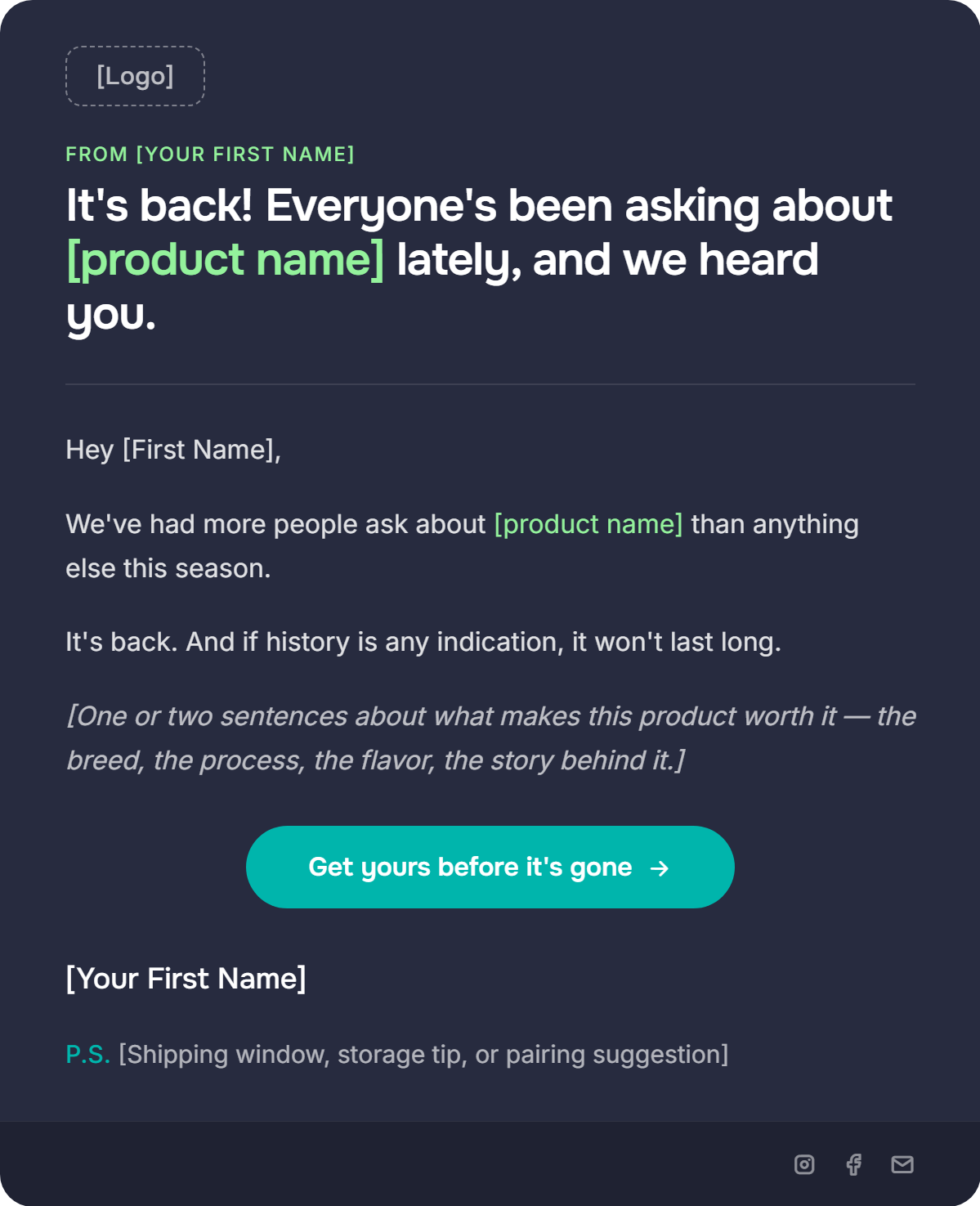
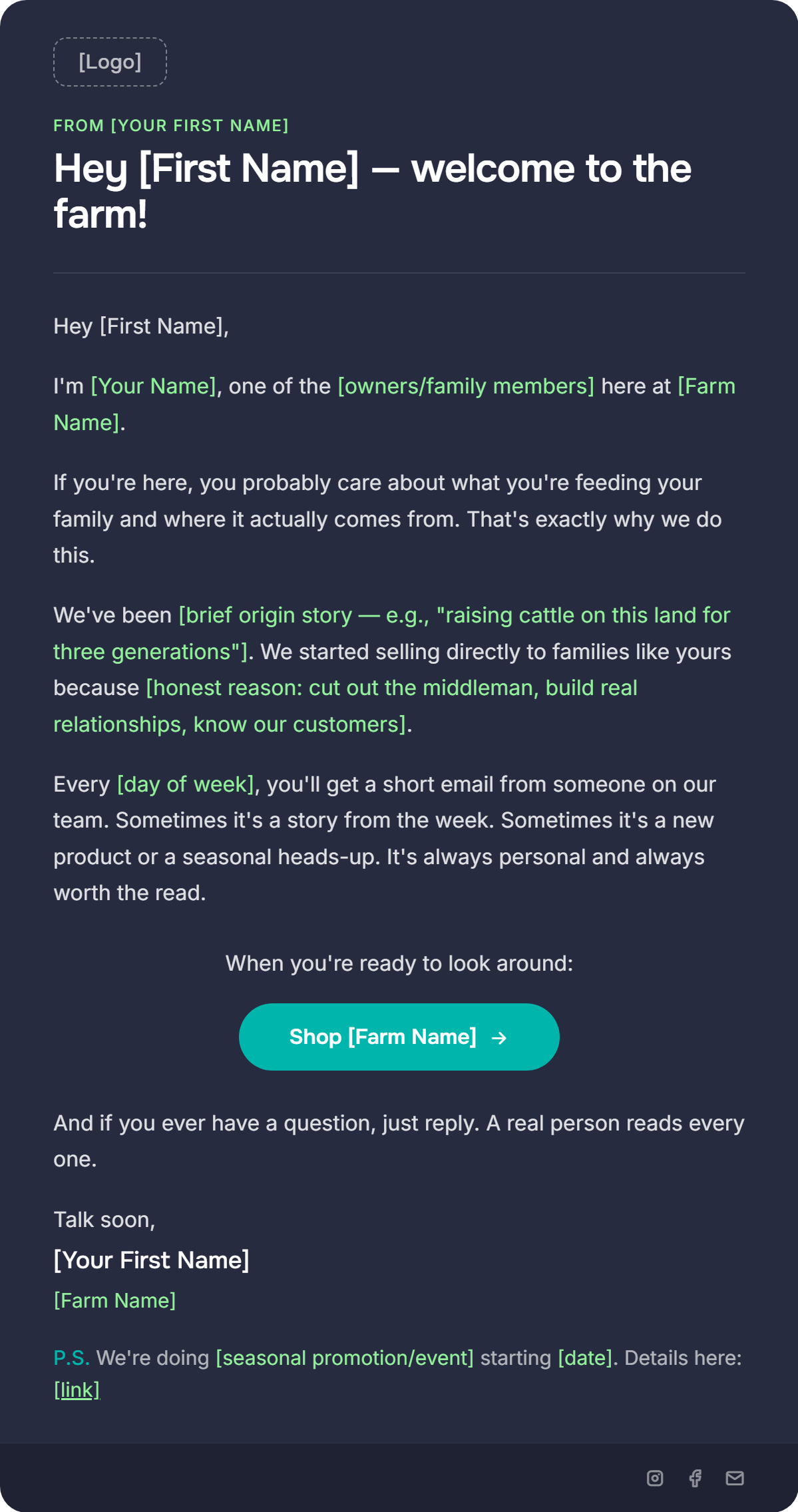
Here are three templates to get you started. Swap in your own stories, products, and voice.
1. Story Email
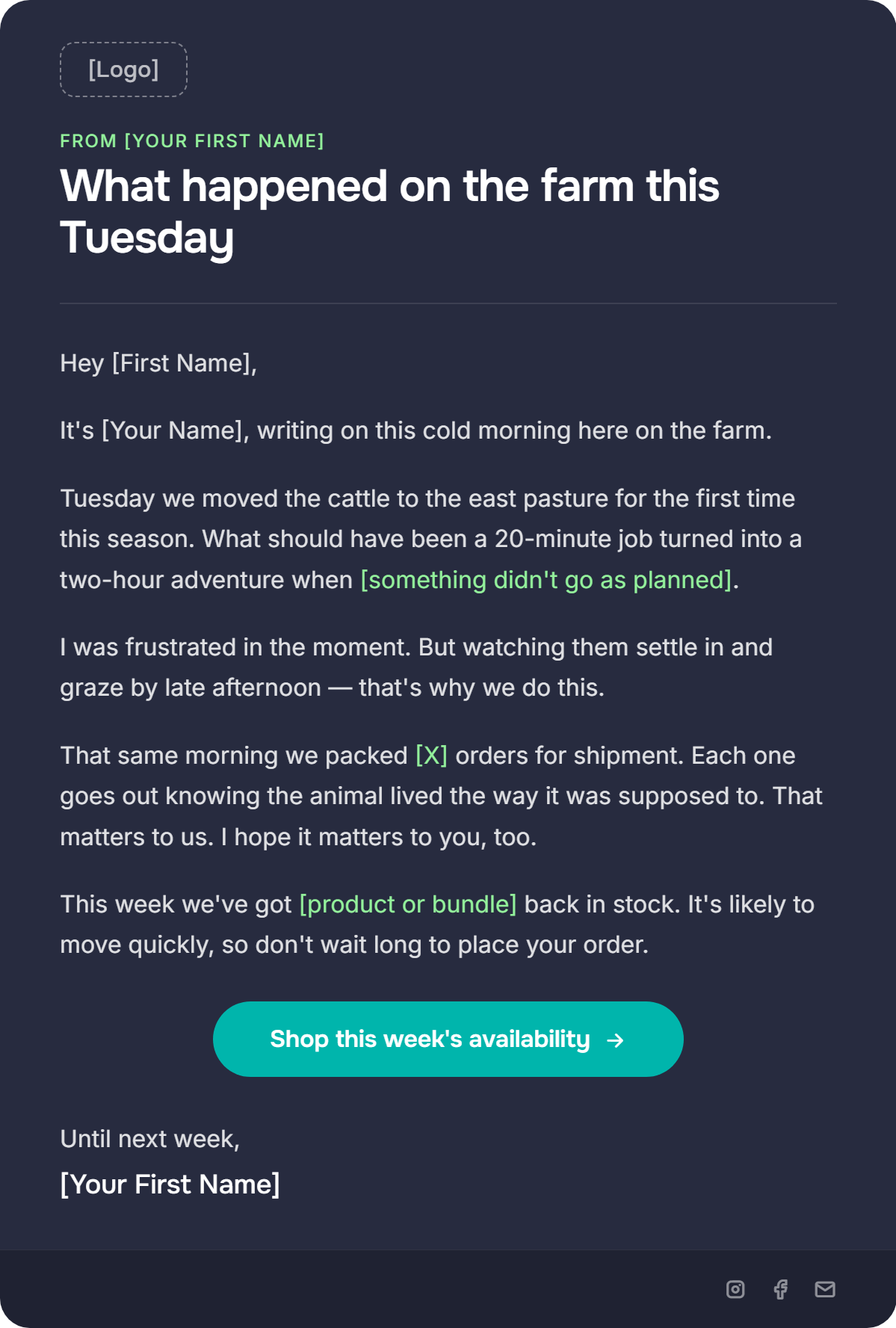
2. Product Launch Email
3. Welcome Email
When Your Email Marketing Works, Your Farm Has To Keep Up
Good emails get people to your store, but if the buying experience is clunky, you lose them. GrazeCart is built by farmers to make that handoff seamless, so traffic from your emails actually turns into sales.
Here’s how it helps:
- Accurate pricing: Charge based on actual weight, not estimates — critical for meat and produce, and something generic platforms simply can't do.
- Flexible subscriptions: Run CSA boxes and recurring orders around your production calendar, not a platform's default settings
- Built-in delivery and shipping: Manage local routes and nationwide orders in one place, without a separate tool.
- Mobile-friendly storefront: Make it easy for customers to browse and check out on any device without needing to call to figure it out.
- Customer insights: Use real purchase data to send more targeted, effective emails instead of blasting everyone with the same message.
- Automated follow-ups: Recover abandoned carts and drive repeat orders automatically — this works in the background while you're in the field.
- Full ownership: Own your brand, your storefront, and your customer relationships. No marketplace. No competing listings. No platform taking a cut of your visibility.
You've done the hard work of building the relationship. Don't lose the sale at the door. The email gets them there. GrazeCart closes the deal. Try it out for yourself and see how it helps turn your marketing into real sales — without the extra hassle.
